
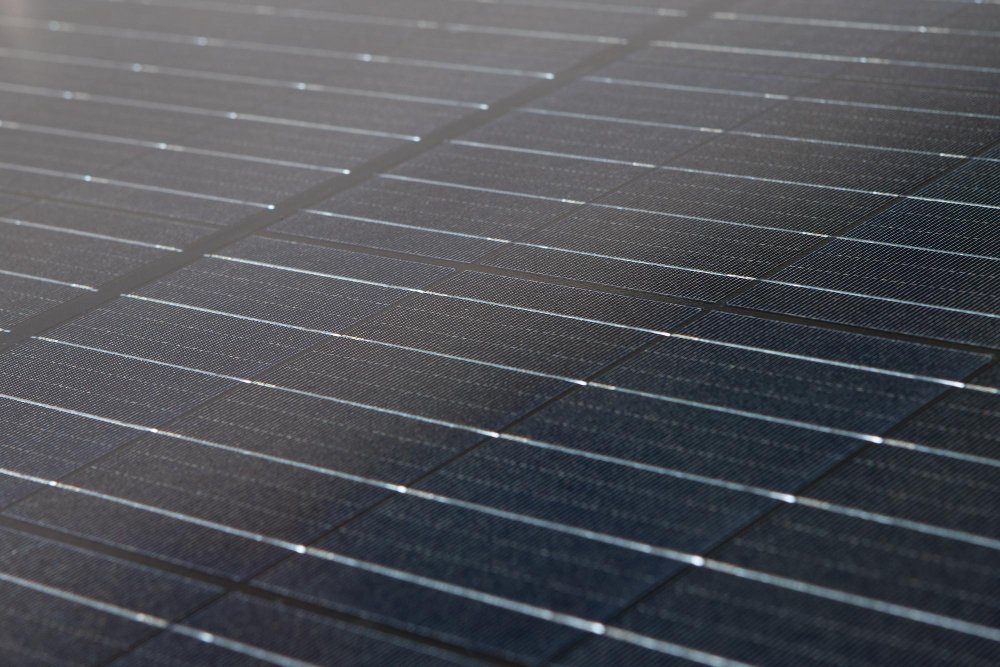
Solar panels convert sunlight into electricity that can be used in your home. Although the technology behind them is advanced, the basic operating principle is relatively simple: the panels generate power, the inverter adapts it for use, and the system distributes it where it is needed.
In this guide, we explain step by step how solar panels and the other components of a home photovoltaic system work.
Solar panels generate electricity, but they do not store it. Solar batteries are needed to store energy.
1. The panels absorb solar radiation
Each solar panel is made up of a large number of photovoltaic cells. When sunlight hits these cells, the light energy excites the electrons inside the semiconductor material, usually silicon.
The movement of the electrons creates an electric current. This process is called the photovoltaic effect, and it takes place with no moving parts, no noise and no burning of fuels.
2. Direct current is produced
Photovoltaic cells produce direct current, known as DC. Household electrical appliances, however, mainly use alternating current, or AC. For this reason, the energy produced by the panels is not sent directly to household appliances.
The panels are connected in series to form what are known as strings. A system may contain one or more strings, depending on the number of panels, the inverter’s specifications and the electrical design.
3. The inverter converts the energy into alternating current
The DC energy from the panels is sent to the inverter. The inverter converts it into AC energy with a voltage and frequency suitable for the home’s electrical installation and the public grid.
The inverter is one of the main components of the system. In addition to converting energy, it controls the electrical parameters, optimizes the operation of the panels, monitors production and shuts down the system if it detects unsafe conditions.
4. The energy is used in the home first
The energy produced by the solar system is used first for the appliances that are running in the home. During the day, the panels can power the refrigerator, lighting, air conditioner, heat pump and other electrical devices.
The more solar energy you use directly at the moment it is produced, the higher your self-consumption and the greater the savings on your electricity bill can be.
5. What happens to the excess energy?
If the panels produce more energy than the home is consuming at that moment, the surplus can be sent to the public grid, in accordance with the rules and the agreement with the energy supplier.
If the system includes batteries, some or all of the excess energy can be stored for later use, for example in the evening, at night or during periods of low solar production.
6. What happens when the panels don’t produce enough?
When solar production is lower than the home’s consumption, the missing energy is drawn automatically from the grid. In a hybrid system, energy can also be drawn from the batteries, depending on the configuration and their state of charge.
Switching between solar energy, the battery and the grid happens automatically. The user usually notices no difference during normal operation.
7. Do the panels work when it’s cloudy?
Yes. Solar panels produce energy even on cloudy days, because part of the solar radiation still reaches their surface. However, production is lower than on a clear day with strong sunlight.
At night the panels do not produce energy. During that period, the home is supplied by the grid or by the batteries, if they are part of the system.
8. Does the system work during a grid outage?
A standard grid-connected system usually shuts down automatically during a power outage. This is a safety measure that prevents power from being sent to the grid while technical crews may be working on it.
To have power during outages, you need a hybrid system with a battery and a backup output, also known as backup or EPS. The power and capacity of this system must be designed according to the appliances you want to keep running.
9. What affects the system’s output?
Energy production does not depend only on the rated power of the panels. The system’s performance is also affected by the conditions of the property, the quality of the design and the way it is installed.
- Orientation and tilt of the panels.
- The amount of solar radiation at the location.
- Shading from trees, chimneys or surrounding structures.
- Panel temperature and weather conditions.
- Dirt, dust, leaves or snow on the panels.
- Quality of the equipment, cables and electrical connections.
- String design and compatibility with the inverter.
10. How is production monitored?
Most modern inverters connect to the internet and allow monitoring through a mobile app or online platform. The user can see current production, daily, monthly and annual energy, the property’s consumption, the energy sent to the grid and the battery status.
The monitoring system can also display alerts and help with the early detection of a drop in performance or a technical problem.
How long do solar panels last?
Quality solar panels typically have a lifespan of 25 to 30 years or more. They do not suddenly stop working after this period, but their output gradually decreases over the years.
Professional design, safe installation, monitoring and periodic maintenance help the system maintain its performance and reliability for a long time.
One system, several important components
The panels are the most visible part of a solar system, but the final result depends on all the components working together: the panels, inverter, mounting structure, cables, electrical protections, grounding system, meter, monitoring and batteries, when included.
Want to know what solar system suits your home? Use the Solar Wizard Calculator for an initial estimate or contact us for a professional analysis of your property.
Free tool for estimating your solar system
Thinking about switching to solar energy, but don’t know where to start? Solar Wizard guides you through a quick assessment and instantly gives you a calculation tailored to your property — system capacity, annual savings and payback period.
What you get in 2 minutes:
- The recommended solar system capacity for your home or business
- The projected annual savings on your electricity bill
- The approximate system cost and payback period
- The environmental impact of your future solar installation
No obligation. No pressure to buy. Just reliable figures.

— kWh/
- —
- —
- —
- —
- —