
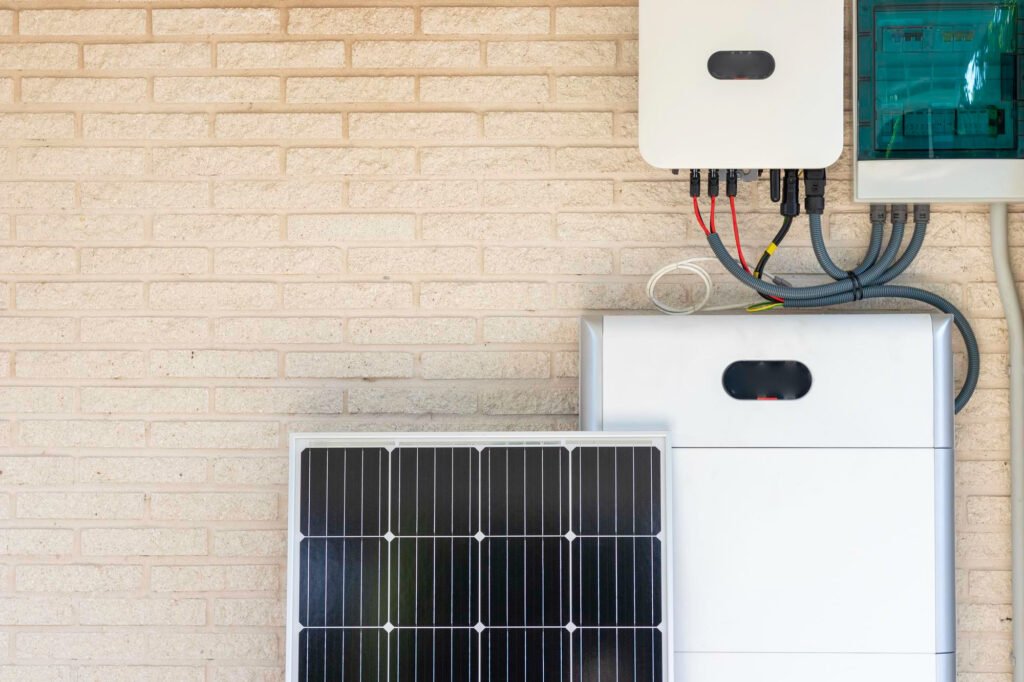
Installing a battery can make your solar system more flexible, increase the use of energy produced at home, and provide backup power during grid outages. However, the price of solar batteries remains an important factor, and a battery is not necessarily the best investment for every property.
Whether a battery is worth it for you depends on your consumption profile, the amount of surplus energy, the price of electricity, how energy delivered to the grid is compensated, and how important backup power is for your home or business.
A battery does not produce energy. It stores a portion of the energy produced by the panels during the day so you can use it later.
Battery prices have dropped significantly
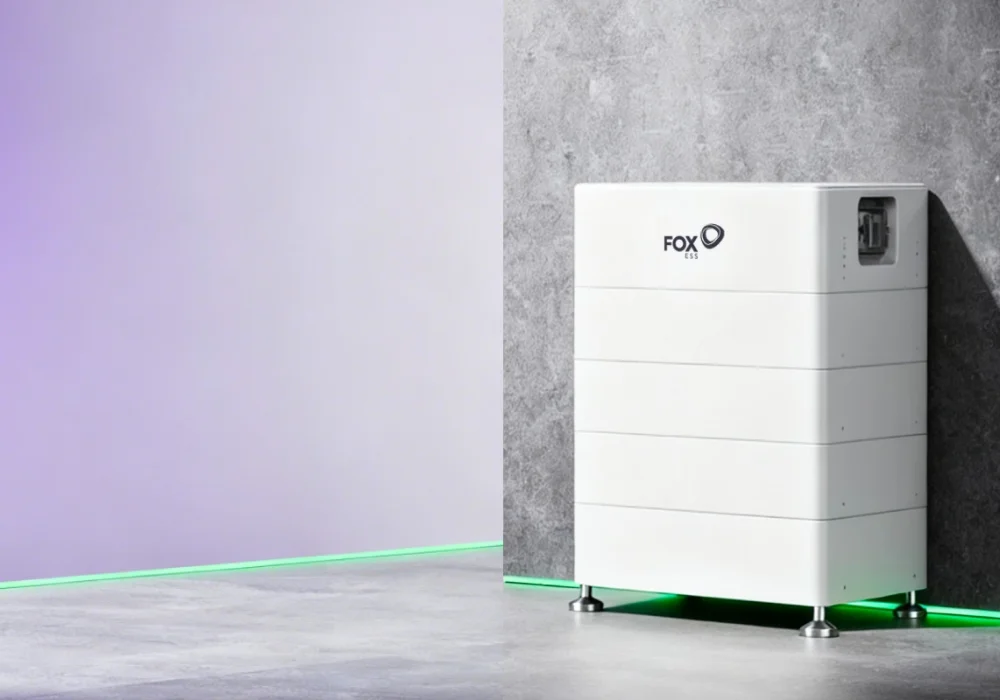
One of the main reasons solar batteries are becoming more and more attractive is the significant drop in prices during 2026. The technology has become more affordable, and in the Kosovo market you can now find battery systems with a capacity of around 10 kWh at a price of approximately €3,000–4,000.
Solar battery prices in Kosovo
The price of solar batteries depends on capacity, technology (usually LiFePO4), discharge power, and the manufacturer. In addition to the battery modules, the price should include the management system, hybrid inverter, protective equipment, installation, and commissioning.
Before buying, ask for detailed quotes and check which components are included in the price. Compatibility with your existing inverter is essential, so it is recommended that you consult an expert before deciding.
At current prices, installing a 10 kWh battery is no longer an unattainable investment for most families who already have or are planning a solar system.
The final price depends on the manufacturer, the technology, the usable capacity, the discharge power, the warranty, and compatibility with the inverter. You should also check whether the offer includes only the battery modules or also the management system, protective equipment, installation, and commissioning.
This price drop significantly improves the economic viability of battery systems, especially for households with high evening consumption, surplus energy during the day, or a need for backup power.
How does a solar system with a battery work?
During the day, the energy produced by the solar panels is first used for the appliances running in the building. If production exceeds current consumption, the surplus energy can be used to charge the battery.
When solar production decreases or stops, the stored energy can be used to power your loads. Once the battery reaches the set discharge limit, energy is drawn from the grid again, if it is available.
What are the main benefits?
Greater use of your solar energy
Without a battery, solar energy is used at the moment it is produced. If the home has low consumption during the day, part of the production may be sent to the grid. A battery can store some of this energy for use in the evening and at night.
More energy independence
By storing the energy produced, the need to draw energy from the grid during hours when the panels are not producing is reduced. The degree of independence depends on the size of the solar system, the battery capacity, and the property’s consumption.
Backup power during outages
A system designed for backup operation can continue to power selected appliances during a grid outage. This can be especially useful in areas where outages are frequent or for properties with critical equipment.
However, not every hybrid inverter automatically provides power during an outage. The system must have a suitable backup output and separate circuits for the loads that need to keep running.
Better protection against changes in electricity prices
The more of the energy you produce that you use yourself, the less you depend on energy purchased from the grid. The financial benefit depends on current tariffs and on how surplus energy delivered to the grid is treated.
When can a battery be a good choice?
-
- When most of your consumption occurs in the evening or at night.
-
- When the system regularly produces more energy than is used during the day.
-
- When grid outages are frequent.
-
- When you want important appliances to keep working during an outage.
-
- When the compensation for energy delivered to the grid is lower than the value of energy used directly.
-
- When you want a higher level of energy independence.
-
- When the property is in an area without a power grid or with an unstable supply.
When might a battery not be economically necessary?
If most of the energy is consumed during the day, solar production can be used directly without needing to be stored. This is common for businesses, offices, workshops, and some households with high daytime consumption.
A battery may also not be a priority when surplus energy is compensated favorably through the grid, or when the owner wants the shortest possible payback period.
In these cases, it may be more economical to first install a properly sized on-grid system, while planning for the option of adding a battery in the future.
Do the panels and the battery work during a grid outage?
Not every solar system keeps working during a power outage. Standard on-grid inverters usually shut down automatically when the grid is down, to protect personnel who may be working on the power lines.
Backup power requires a hybrid inverter or another solution that supports this function, a compatible battery, and an installation designed for safe isolation from the grid.
You also need to decide which appliances will be powered. A refrigerator, lighting, internet and electronic devices require much less power than an electric water heater, a heat pump, an oven or large air conditioners.
How large should the battery be?
Battery capacity should not be chosen based only on the power of the panels. It should match the amount of surplus energy that can be stored and the consumption you want to cover after solar production ends.
The following should be analyzed for sizing:
-
- Consumption during the evening and night.
-
- Surplus energy produced during the day.
-
- Maximum power of appliances running at the same time.
-
- Desired duration of backup power.
-
- Usable capacity, not just the nominal capacity of the battery.
-
- Maximum charging and discharging power.
-
- Limits allowed by the inverter and the battery management system.
The difference between kW and kWh in batteries
When choosing a battery, it is important to understand the difference between power and capacity:
-
- kWh shows how much energy the battery can store.
-
- kW shows how much power the battery can deliver at a given moment.
A battery may have sufficient capacity in kWh but be unable to power high-power appliances at the same time. Therefore, both values must be checked during the design phase.
A simple example
If a household consumes about 8 kWh from the evening until the morning, this does not automatically mean that an 8 kWh battery is enough. You must take into account the usable capacity, losses during charging and discharging, the minimum state-of-charge limit, and the desired reserve.
At the same time, the solar system must produce enough energy during the day to charge the battery after covering the building’s current consumption.
Which battery technology should you choose?
Modern solar systems often use lithium iron phosphate batteries, known as LiFePO4 or LFP. They offer good longevity, high efficiency and thermal stability when installed and used according to the manufacturer’s instructions.
When choosing, you should not look only at capacity and price. The following also matter:
-
- Compatibility with the inverter.
-
- Nominal and usable capacity.
-
- Number of declared cycles.
-
- Continuous and peak power.
-
- Warranty and guaranteed capacity after several years.
-
- Permitted temperature conditions.
-
- Possibility of expansion with additional modules.
-
- Technical support and service.
Can a battery be added later?
In many cases, yes, but this should be planned from the start. Installing a hybrid inverter or a system prepared for battery integration can make future expansion simpler.
However, not every battery is compatible with every inverter. Communication between the inverter and the battery management system must be supported by both manufacturers. For this reason, it is not recommended to buy a battery without first checking technical compatibility.
How long does a solar battery last?
Longevity depends on the technology, the number of cycles, temperature, depth of discharge and how the battery is used. Over time, the battery’s capacity gradually decreases, even if it continues to function.
Before purchasing, you should check the warranty terms, the number of cycles and the percentage of capacity that the manufacturer guarantees after the specified period.
Is a battery a financial investment or a matter of security?
For some users, a battery is purchased mainly to reduce the amount of energy drawn from the grid and increase savings. For others, the main value is security of supply during outages.
If backup power is a priority, the return on investment should not be assessed solely through savings on the bill. The value of continuity of operations, protection of important equipment and comfort during outages should also be taken into account.
So, is installing a battery worth it?
Yes, with the significant drop in prices during 2026, a battery can be more cost-effective than before. A system with a capacity of around 10 kWh, which in Kosovo can be found for approximately €3,000–4,000, can be a reasonable investment if you have enough surplus energy during the day, high evening consumption, frequent outages or a need for greater energy independence. Not necessarily if you consume most of your energy while the panels are producing, if excess energy is compensated favorably, or if your priority is the fastest return on investment.
The best decision is made after analyzing production and consumption for every hour of the day, not just by comparing annual values.
First, evaluate your solar system
For a preliminary estimate of system capacity, annual production, savings and return on investment, use the Solar Wizard Calculator.


— kWh/
- —
- —
- —
- —
- —
For selecting and sizing a solar system with a battery, Voltaris analyzes the consumption profile, the equipment that needs to be powered, the required autonomy and the compatibility of components.
For a professional assessment and a personalized offer, contact the Voltaris team.